
The answer matters more than most companies realize. Improper IT equipment disposal creates two serious risks: data breaches and environmental liability.
Both can be expensive. Both are preventable.
The global e-waste problem is accelerating. Over 63 million metric tons of electronic waste was generated in 2024—a 5% increase from the previous year. Only about 22% is properly recycled. The rest ends up in landfills or in the hands of scavengers who recover and resell devices online.
For businesses, the stakes go beyond environmental responsibility. Data breaches average $4.45 million per incident—and improper IT disposal is a common cause. One security researcher purchased 85 used devices for $600 and recovered over 300,000 personal files.
Why Deleting Files Is Not Enough
Most people assume that deleting files or reformatting a hard drive eliminates the data. It does not.
Standard deletion removes the file directory entry but leaves the actual data on the drive. Reformatting does not overwrite the full disk. Even a factory reset can leave recoverable data behind.
For businesses handling customer information, financial records, or proprietary data, this creates significant liability. Regulations like HIPAA, GDPR, and PCI DSS require certified data destruction before disposing of IT assets. Failure to comply can result in substantial fines.
The Three Levels of Data Destruction
Secure IT asset disposition requires one of three approaches:
Data Wiping (Sanitization)
Data wiping uses specialized software to overwrite the entire storage device multiple times, making the original information unrecoverable. This method works when the equipment will be resold or donated. Certified data wiping follows NIST 800-88 standards and provides documentation.
Degaussing
Degaussing uses a powerful magnetic field to disrupt the storage medium, rendering data permanently unreadable. This method works for traditional hard drives and magnetic tape but it destroys the drive’s functionality.
Physical Destruction
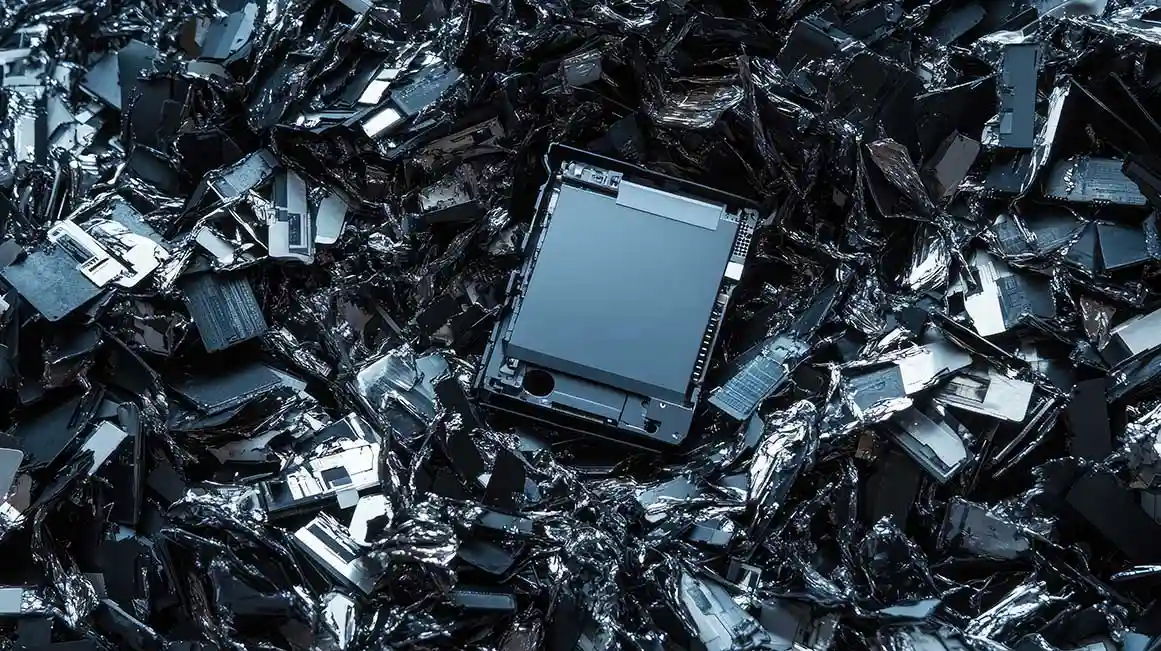
Hard drive shredding and physical destruction are the most definitive methods. Industrial shredders reduce drives to small fragments, making recovery impossible. Certified destruction providers issue a Certificate of Destruction documenting serial numbers, method, and date.
The Environmental Responsibility
IT equipment contains hazardous materials, including lead, mercury, and cadmium. When improperly disposed of, these substances contaminate soil and groundwater. Electronics also contain valuable materials—gold, silver, copper, and rare earth elements—that can be recovered through proper e-waste recycling.
Responsible disposal follows a hierarchy: reuse, refurbish, recycle. Equipment that still functions can be wiped and resold. Equipment that no longer functions can be disassembled for parts.
Only equipment with no remaining value should be processed for material recovery. Enterprises contribute to nearly 40% of global e-waste due to frequent hardware upgrades and digital transformation initiatives. Companies that implement responsible computer recycling practices reduce their environmental footprint while often recovering value from retired assets.
What to Look for in an IT Asset Disposition Partner
Not all ITAD providers are equal. The difference between a reputable provider and a questionable one can mean the difference between secure disposal and a data breach.
Certifications matter.
Look for R2 (Responsible Recycling), e-Stewards, and NAID AAA certification for data destruction. These require regular audits and documented processes.
Chain of custody documentation.
A reputable provider tracks every device from pickup through final disposition. You should receive documentation showing what happened to each asset.
Secure transportation.
Equipment should be transported in locked vehicles with GPS tracking.
Downstream accountability.
Ask where materials go after processing. Reputable providers document their downstream vendors and certify materials are not exported to countries with inadequate protections.
Building an Internal IT Disposal Policy
Many organizations lack a formal policy for IT asset disposition. Without clear guidelines, equipment accumulates, is improperly discarded, or leaves without documentation.
A proper policy should address:
Inventory and tracking.
Every device is tracked from acquisition through disposal, with the serial number and last user logged.
Data classification.
Devices that hold sensitive data require certified destruction. Devices used for non-sensitive purposes may be appropriate for donation after standard wiping.
Holding procedures.
Equipment awaiting disposal stored securely with limited access.
Approved disposal channels.
Employees know exactly where retired equipment goes. Ad hoc disposal explicitly prohibited.
Documentation requirements.
Every disposal generates documentation retained for audit purposes.
The Value Recovery Opportunity
IT disposal is often treated as a cost center, but it can be a source of value recovery. Functional equipment—particularly enterprise servers, networking hardware, and recent workstations—often retains significant resale value.
Some ITAD providers offer revenue-sharing arrangements where proceeds from resale or material recovery are split with the client. The key is timing. Equipment depreciates rapidly. A server worth meaningful resale today may be worth only scrap value in 18 months.
Frequently Asked Questions
Q: What does ITAD stand for?
ITAD stands for IT Asset Disposition. It includes device wiping, removal, evaluation, and recycling.
Q: What is NIST 800-88?
A: NIST 800-88, aka Guidelines for Media Sanitization, provides comprehensive, technology-neutral standards for securely erasing, purging, or destroying data from storage media to prevent recovery.
Q: What is R2 (Responsible Recycling)?
A: R2 is a certification standard for electronics repair and recycling. It ensures that electronic waste is managed safely, protecting data security, worker health, and the environment by enforcing strict, audited, and compliant practices.
Q: What is NAID AAA Certification?
A: NAID AAA Certification is the premier, voluntary security standard for data destruction vendors, ensuring they meet rigorous, audited, and legal requirements for shredding and IT asset disposal.
Q: What is e-Stewards?
A: e-Stewards is a third-party certification program for electronics recyclers and IT Asset Disposition (ITAD) providers, ensuring safe, ethical, and environmentally responsible management of used electronics.
Q: What is a Certificate of Destruction?
A: A Certificate of Destruction (CoD) is an official, binding document verifying that sensitive, confidential, or hazardous materials—such as documents, hard drives, or products—have been securely, permanently, and irreversibly destroyed.
Q: Can we just wipe the drives ourselves and donate the equipment?
A: Consumer-grade wiping tools are not sufficient for business data. Use enterprise-grade sanitization software that meets NIST 800-88 standards, or work with a certified ITAD provider that documents the process.
Q: How long should we retain disposal documentation?
A: HIPAA-covered entities should retain documentation for at least six years. As a general practice, retain certificates of destruction for at least seven years.
Q: Is it safe to sell old equipment on the secondary market?
A: Yes, if the data is properly destroyed first. Certified data wiping makes equipment safe for resale while preserving functionality and value.
Dispose of Your IT Equipment the Right Way
Tech Team Solutions partners with certified ITAD providers to ensure your retired IT equipment is handled securely and responsibly. From secure data destruction to certified electronics recycling, we help Dallas, Fort Worth, Austin, and San Antonio businesses close the loop on their technology lifecycle. Contact us to discuss your IT disposal needs.